


The automotive industry is one of the most complex and dynamic manufacturing sectors, combining a wide variety of processes with strict requirements for safety, quality and environmental protection. From sheet-metal cutting and welding to body preparation, final painting and assembly, every stage generates specific contaminants that must be controlled. ALWO dust extraction solutions are designed to address these challenges and provide a cleaner, safer and more energy-efficient working environment throughout the automotive manufacturing process.
Drawing on extensive experience in the design and implementation of extraction systems for automotive applications, ALWO develops integrated configurations for every production stage, from large plants with continuous lines to specialized workshops. Each project is engineered around the actual process, contaminant type, available space and level of automation. From capturing metal dust in cutting areas to removing vapors from paint booths and treating extracted air, every system is designed for continuous operation and compliance with demanding quality, environmental and occupational-health requirements.
Critical automotive processes requiring dedicated extraction
- Metalworking: cutting, grinding, milling, drilling and CNC machining – these processes generate metal dust, sparks and fumes that can endanger operators and affect CNC equipment. ALWO supplies downdraft benches, source-capture systems, articulated extraction arms and high-efficiency filters for fine and metallic particles. Pressure sensors and self-cleaning filtration units can be integrated for continuous operation.
- Welding, brazing and soldering – welding fumes contain ultrafine particles and hazardous gases, including ozone, nitrogen oxides and metal compounds. ALWO solutions can include flexible extraction arms, magnetic capture hoods for vertical positions, variable-speed fans, HEPA filtration and activated carbon. Spark detection and automatic extinguishing systems can also be integrated where required.
- Body painting and primer application – paint booths release solvent vapors, volatile organic compounds (VOCs) and overspray particles. ALWO integrates air capture and filtration systems, filtered ceilings, extraction walls, pressurized enclosures and air-handling units to control air quality and pressure in application areas. Heating units and heat exchangers can be added to improve thermal efficiency.
- Drying and thermal treatment – ovens and drying tunnels require effective ventilation and rapid removal of hot air containing vapors and particles. ALWO solutions can include high-temperature industrial fans, heat exchangers, recirculation systems and thermally insulated ductwork. Heat recovery can reduce energy demand and operating costs.
- Final assembly, electrical testing and packaging – these areas require general ventilation and filtration to reduce ambient dust and protect electronic components, sensors and painted surfaces. ALWO can provide make-up air, local extraction and antistatic ductwork.
- Polishing and finish correction – these operations generate fine particles and vapors from polishing and correction compounds. ALWO downdraft benches with direct capture, collection trays and self-cleaning filters protect operators and treated surfaces. Transparent protection screens can be added to define the work zone.
- Part preparation and degreasing – volatile solvents and degreasing agents require dedicated source capture. ALWO offers compact solutions with controlled recirculation and gas treatment to reduce environmental impact and operator exposure.
Benefits of ALWO systems in automotive manufacturing
- Local capture adapted to each contaminant and process stage;
- Modular systems that can be expanded as production lines and workflows evolve;
- Energy-efficient equipment with heat recovery and automated operating control;
- Engineering aligned with applicable emission, workplace-safety and environmental requirements, including ATEX considerations and ISO 14001 and ISO 45001 management frameworks;
- Technical consulting, process audits and integration into existing production flows with minimal disruption;
- Monitoring and predictive-maintenance options using pressure, airflow and filter-load sensors;
- Optimized airflow for each area, reducing pressure losses and energy consumption;
- Reduced fire, explosion and respiratory risks through effective contaminant capture.
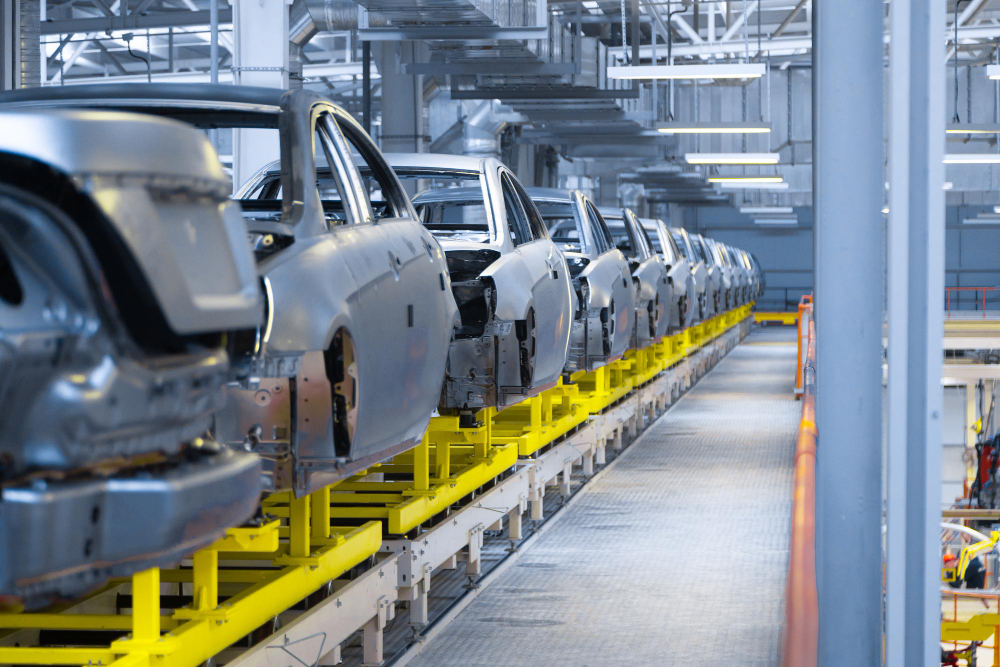
ALWO applications in automotive facilities
- Complete industrial paint lines with pressurized enclosures, sanding benches, Paint Stop filters, ceiling filters, air-handling units and surface preparation and finishing equipment;
- Manual and robotic welding workshops with extraction at every station, articulated arms, spark-detection units, automatic extinguishing systems and centrifugal fans;
- Body-preparation areas with extraction walls, dedicated lighting, integrated conveyors and dust extraction systems for sanding and degreasing contaminants;
- Heat-recovery systems for drying rooms and paint booths connected to industrial climate-control networks;
- Mobile systems for capturing dust and vapors during temporary or prototype operations;
- Automated cells with intelligent extraction, digital control and touchscreen panels for real-time operation.
Frequently asked questions about ALWO automotive extraction systems
1. What benefits can an ALWO system bring to an automotive production line?
It supports a cleaner workplace, lower maintenance downtime, protection for employees and equipment, improved process efficiency, controlled energy use and compliance with applicable environmental and safety requirements.
2. Does ALWO provide a tailored solution for each area of the plant?
Yes. ALWO engineers assess the process, contaminant volume, available space and production layout before defining the system configuration.
3. Can ALWO systems be integrated with robotic lines?
Yes. ALWO can integrate extraction with automated cells, industrial robots, assembly lines and continuously moving production systems.
4. How is an extraction system maintained during continuous operation?
Self-cleaning filters, load sensors, predictive-maintenance plans, accessible replacement modules and continuous monitoring help reduce interruptions.
5. Are ALWO systems compatible with automotive-industry requirements?
Systems are engineered according to the requirements applicable to the project, including ATEX risk assessment where necessary and environmental and occupational-health management objectives.
6. Can process heat be recovered?
Yes. Depending on the application, ALWO can integrate heat exchangers, heat-recovery units and controlled recirculation to reduce operating costs.
7. How long does a complete system take to implement?
The duration depends on system complexity. Standard projects may be delivered in approximately 3–6 weeks, while customized projects may require 6–10 weeks and can be delivered in stages.
8. Does ALWO provide operator training?
Yes. Technical personnel receive operating guidance, project documentation, post-installation assistance and technical support.
9. Are mobile solutions available for rapid interventions?
Yes. ALWO provides mobile units with wheels, flexible electrical connections, articulated extraction arms and integrated filters for temporary capture or hard-to-reach areas.
10. Can extraction efficiency be improved through automation?
Yes. PLC control panels, intelligent sensors, SCADA connectivity and integration options allow operating parameters to be adjusted according to load, schedule and production profile.


